Written by Palmetto Bluff
Dec 06, 2021
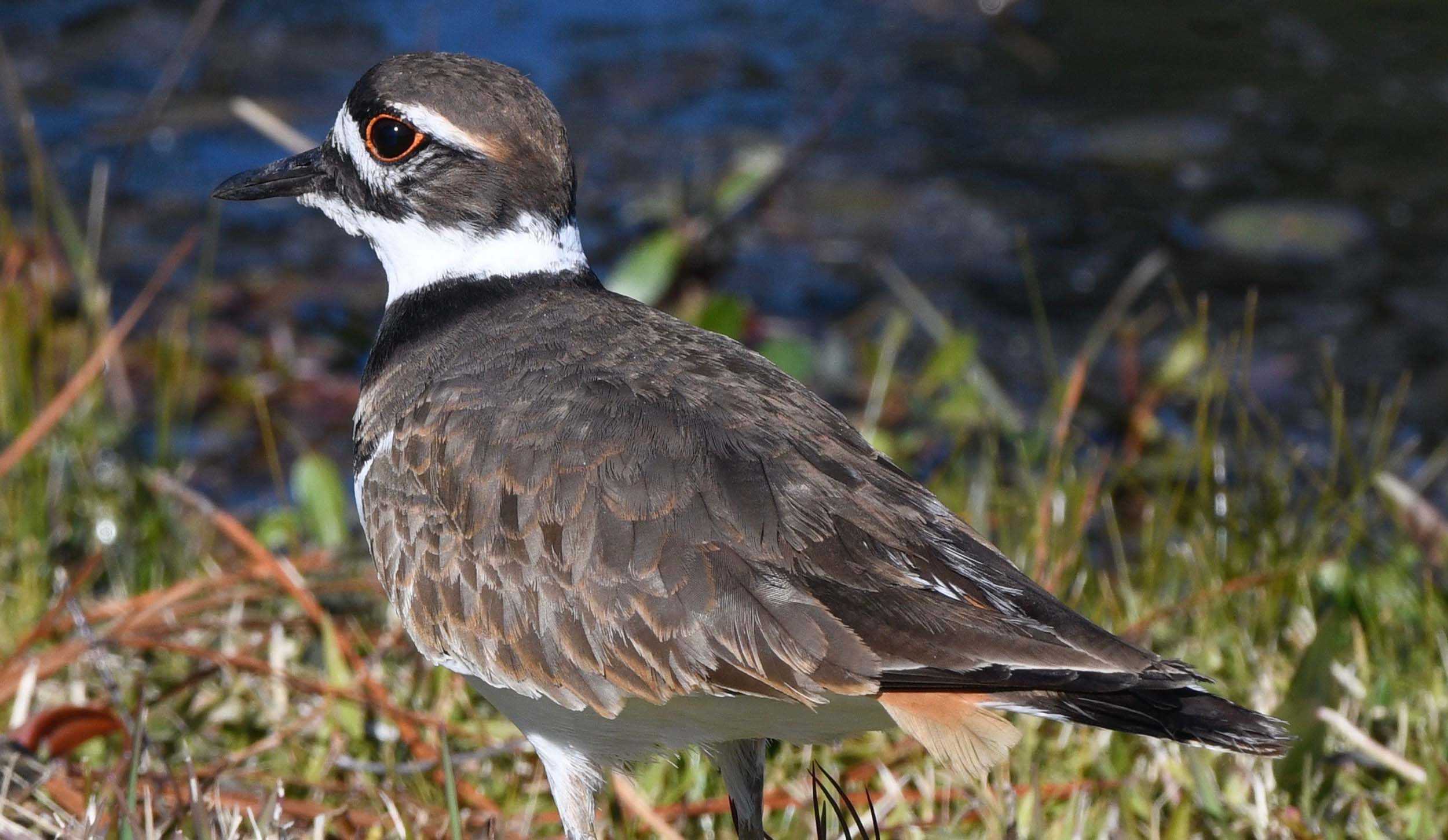
November was a relatively quiet month for unique bird sightings. We did not have a snow goose grace us with its presence as one did last November, but we did see an array of predatory birds that have returned to the Bluff for the winter.

Loggerhead shrikes appeared a few times around Moreland Village this month, but they have also shown up around Longfield Stables in the past. This species is a predatory songbird that feeds predominately on insects, but will consume frogs, lizards, small mammals, and even other birds. They have the nickname butcherbirds as they are known to skewer large prey items onto thorns, twigs, and even barbed wire. Falcons were another group of predators that returned to the Lowcountry for the winter.


American kestrels were observed flying around open fields within the managed forest, while merlins and peregrine falcons were documented in other locales in Beaufort County.

Longfield Stables is an excellent place to seek out kestrels and merlins as they hunt the small sparrows and rodents moving through the pastures. If you do not spend time around the stables, these two species can occasionally be seen around Moreland Village.

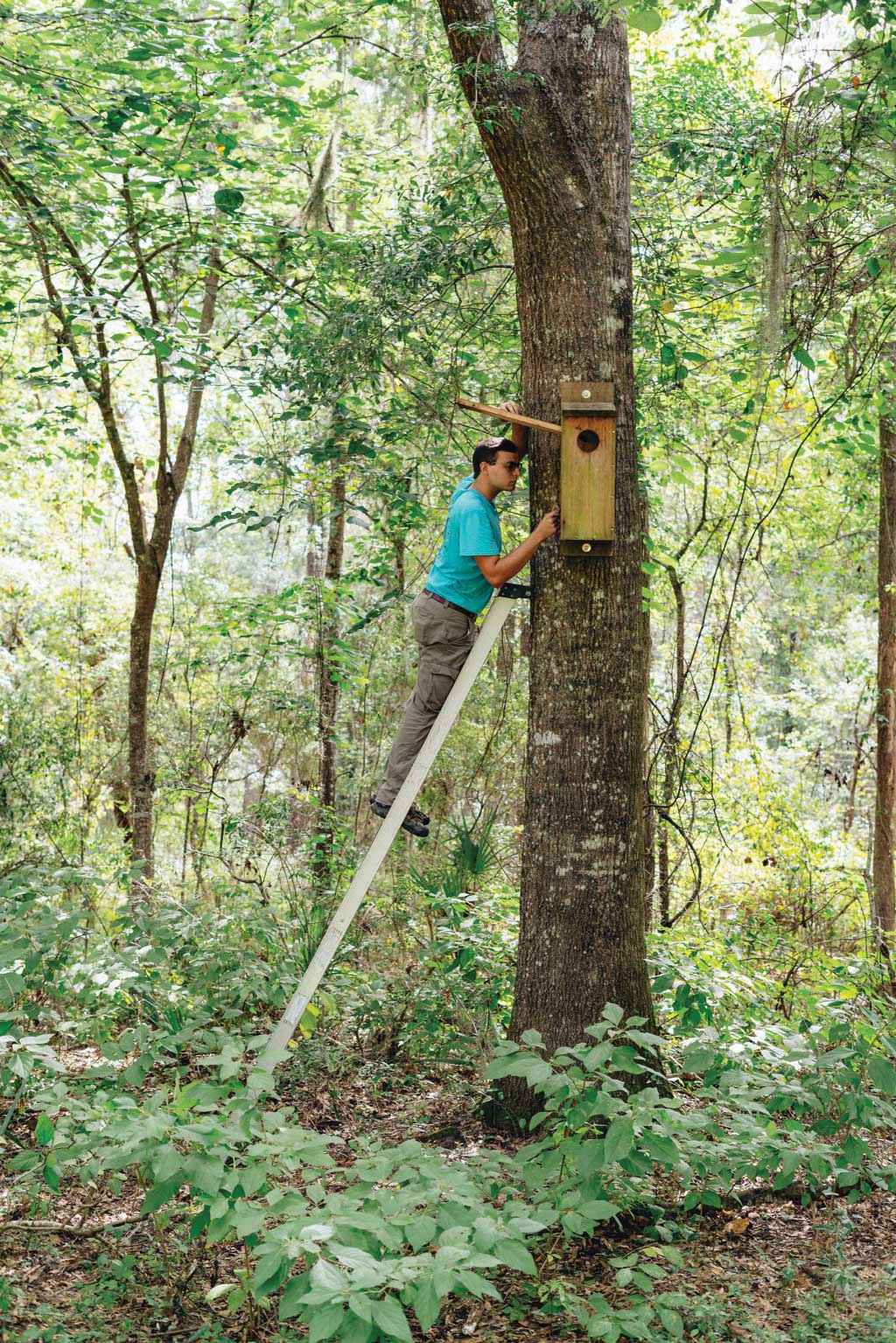
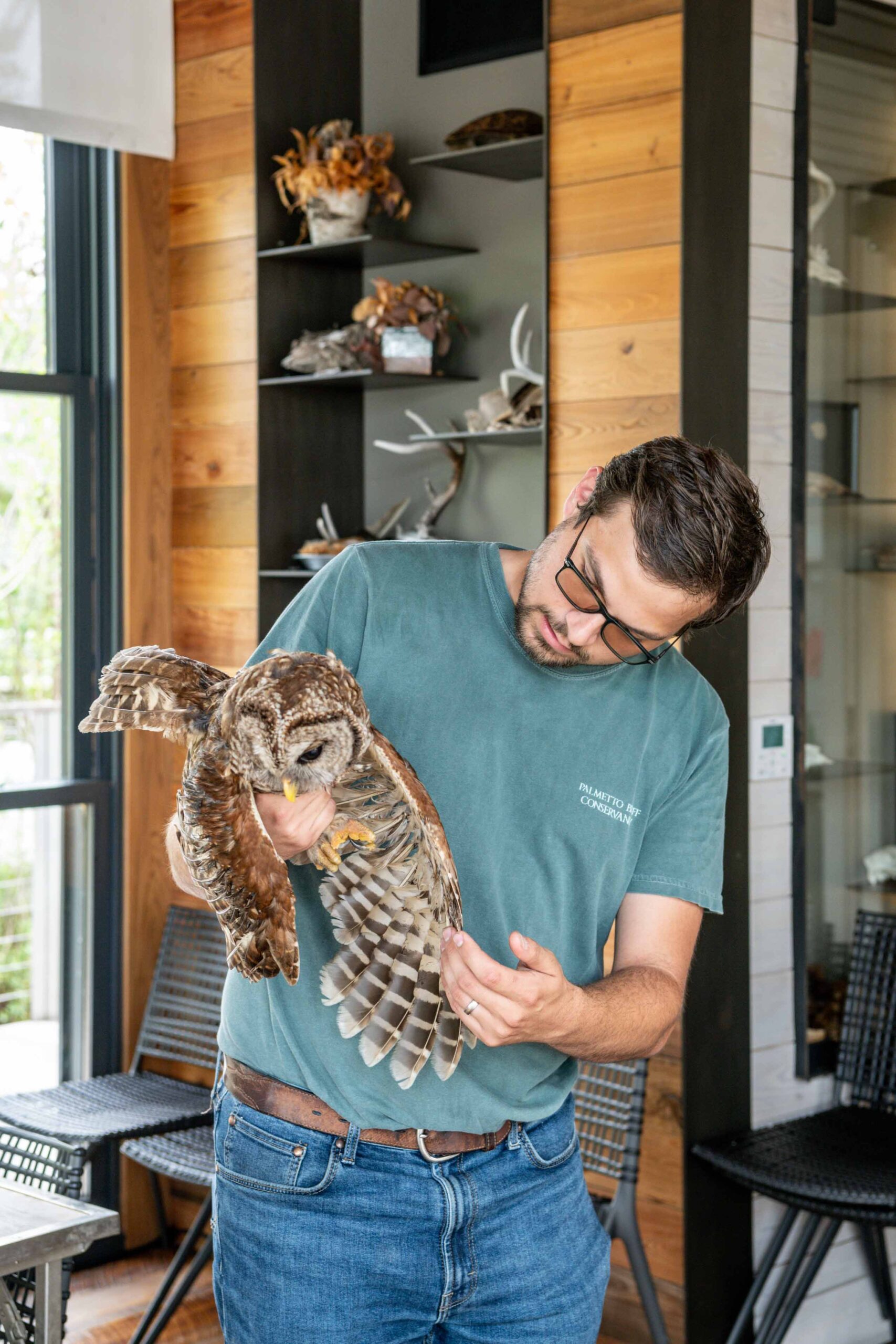
The last raptor I will focus on for November is the eastern screech-owl. Eastern screech-owls are a year-round resident to Beaufort County, but November is when they begin using cavity nest boxes as roosting sites for the winter. During the November cavity nest box survey, we documented three boxes with screech-owls and two boxes that had pellets that they left behind. Pellets are the regurgitated bones, fur, feathers, and exoskeletons of prey that cannot be digested. Owls are the most well-known species to produce pellets, but they are not the only birds to do so. Grebes, cormorants, herons, shrikes, kingfishers, and kingbirds are just a handful of species that also produce pellets. An exciting observation of this month’s screech-owls was that they were all red morphs. This species has three color morphs throughout their range. Gray and red are the most prominent, with red being documented more frequently in southern parts of their range. Meanwhile, the third morph is an intermediate brown coloration. While these individuals make up less than 10% of the total population, there is a higher abundance of brown morphs in Florida. In a study looking at the geographic distribution of the screech-owl color variations, roughly 40% of specimens documented in mid-Florida were brown morphs. The polymorphic nature of eastern screech-owls is still in need of more research, and I am curious to see what future studies will discover.

As we move into December, our gaze shifts towards one of the longest-running citizen science projects in North America: the Christmas Bird Count. The Christmas Bird Count, also known as the CBC, was spearheaded by Frank Chapman, one of the early officers for the Audubon Society. Chapman launched the first CBC on Christmas day in 1900 with 27 participants throughout the United States and Canada and ended the day with 90 species documented. Since the first count, the CBC has grown exponentially and in 2019 had 81,601 participants that ranged from Latin America to Canada. 2019 ended the count with 2,566 species documented, with the United States documenting 672 species. While the 2020 results have yet to be released, Palmetto Bluff documented 63 species during last year’s CBC. This is one of my absolute favorite times of year, and I am always curious to see what unique species will appear during the count. If I had to highlight one species from each year that was an exciting find, I would choose the escapee black swan in 2017, 2018’s female common goldeneye, the Virginia rail of 2019, and the flock of eastern meadowlarks in 2020.


Along with the Christmas Bird Count, FeederWatch is ongoing through December. While this citizen science project is restricted to bird feeders, you can still observe some exciting species! Eastern phoebes, ruby-crowned kinglets, purple finches, gray catbirds, yellow-throated warblers, black-and-white warblers, and orange-crowned warblers are only a few of the unique species that may appear at your bird feeders. One of the best ways to increase your chances of seeing a special feeder visitor is to provide a variety of food at the feeders. I personally have had a lot of success with providing suet in forms aside from traditional suet cakes. Suet balls, suet cylinders, and bark butter bits are all high fat options that use feeder styles more accessible to a wider array of birds than the typical suet cage. You can also gain an additional boon of bird diversity by using suet that has seeds, fruits, nuts, and insects mixed in.
While the winter chill may result in many of us escaping the cold by bird watching from a recliner, I do recommend the occasional stroll through the woods this month to see what birds are on the move. Regardless of the number of feeders and birdbaths we place in the yard, there is a greater world of bird watching that lies just beyond our front door. Hermit thrushes will be sneaking along the trails of River Road Preserve, cedar waxwings and American robins may be seen flocking from berry tree to berry tree in search of food, and common loons will be diving after fish in Corley’s Creek and the May River.
Now is the time of year to seek out some of the more elusive winter residents in Beaufort County! If you see or photograph something you wish to share, you can submit your sightings to Aaron Palmieri at apalmieri@pbconservancy.org and they may appear in next month’s update.
November’s Unique Sightings:
American Kestrel (Managed Forest)
Eastern Screech-Owl (Multiple Cavity Nest Boxes)
Loggerhead Shrike (Moreland Village)
November Contributors:
David Miller, Sharon Pepe